 how-to
Maintaining Cleaning Standards in Apartment Blocks
Table of Contents
- Why Cleaning Standards Matter in Apartment Blocks
- Understanding Health and Safety Regulations for Residential Buildings
- Creating a Communal Area Cleaning Checklist
- Developing an Apartment Block Cleaning Schedule Template
- How to Monitor Cleaning Performance and Compliance
- Managing Tenant Responsibilities and Landlord Duties
- Implementing Sustainable and Cost-Effective Cleaning Practices
- Conclusion
- Frequently Asked Questions
Last Updated: September 27, 2026
Why Cleaning Standards Matter in Apartment Blocks
Maintaining cleaning standards in apartment blocks goes far beyond aesthetics. When residents walk through a clean, well-maintained lobby or stairwell, they feel valued. They're more likely to stay, renew leases, and recommend the building to others. Poor cleaning standards damage reputation and create genuine health risks for everyone inside.
The real issue isn't just dirt, it's consistency. A building that's spotless one week and neglected the next erodes trust faster than one that's reliably adequate. Residents notice. They talk. And property managers end up fielding complaints that could have been prevented with a structured approach.
At Lion Cleaning Group, we've worked with property managers across the country who discovered that the difference between a problem building and a thriving one often comes down to one thing: a clear, documented cleaning standard that everyone understands and follows. Without it, cleaning becomes reactive. With it, cleaning becomes predictable.
This guide covers the practical steps for maintaining cleaning standards in apartment blocks. We'll show you how to build a system that works, how to monitor it, and how to adapt it as your building's needs change.
Understanding Health and Safety Regulations for Residential Buildings
Health and safety regulations exist to protect residents and staff. The Health and Safety at Work etc. Act 1974 sets the baseline for workplace safety, and it applies to communal areas in residential buildings. As a property manager or landlord, you're responsible for ensuring communal areas meet these standards.
The key regulation is the Workplace (Health, Safety and Welfare) Regulations 1992, which covers things like cleanliness, temperature, lighting, and ventilation in communal spaces. Neglecting these isn't just poor practice, it can create liability if someone is injured or falls ill due to poor hygiene.
Beyond legislation, many councils and housing associations follow guidance from the Housing Ombudsman or their local authority. Some buildings operate under service charge agreements that specify exact cleaning frequencies. Understanding what applies to your building is step one.
Here's what regulators typically require:
- Communal areas must be kept clean and free of debris
- High-touch surfaces must be disinfected regularly
- Floors must be safe (no trip hazards, spills cleaned promptly)
- Waste must be managed so it doesn't attract pests or create odours
- Ventilation must work to prevent mould and damp
The standard isn't "perfect", it's "reasonably clean and safe." What that means in practice depends on foot traffic, the building's age, and local expectations. A high-rise apartment block in a city centre faces different pressures than a converted Victorian house with six flats.
Creating a Communal Area Cleaning Checklist
A cleaning checklist is your foundation. Without one, cleaning becomes guesswork. With one, it becomes measurable.
Your checklist should cover every communal area in your building. Start by listing each space: lobby, stairwells, corridors, lifts, communal gardens, bin storage, parking areas, and any shared facilities. Then, for each space, identify what needs cleaning and how often.
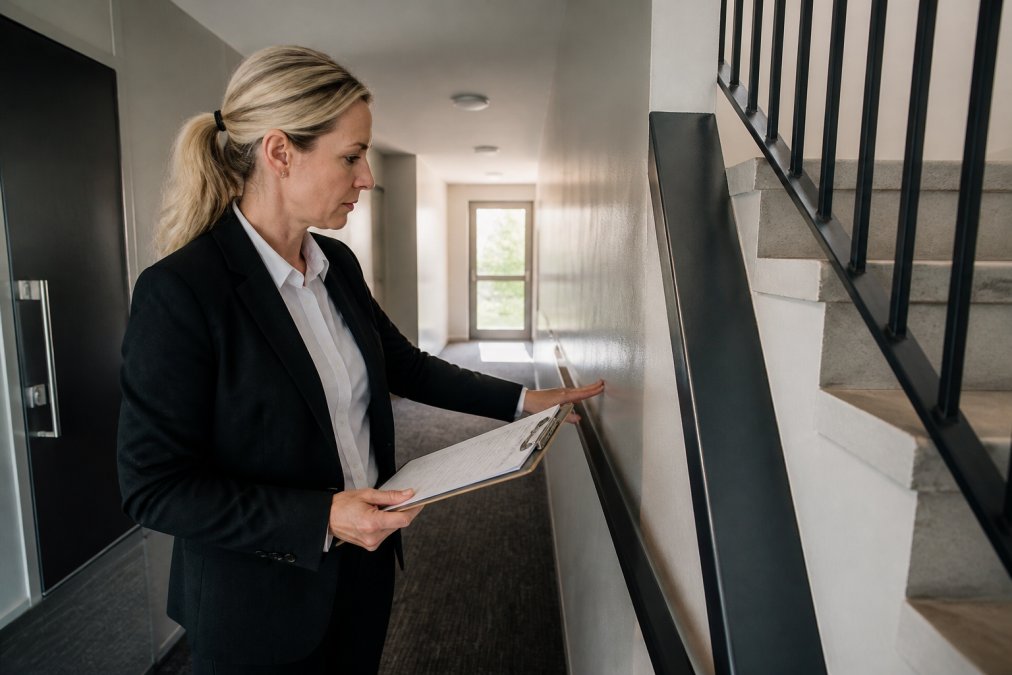
A practical checklist includes:
Daily tasks:
- Empty bins and replace liners
- Sweep lobby and main corridors
- Wipe high-touch surfaces (door handles, lift buttons, handrails)
- Check for spills or hazards
Weekly tasks:
- Mop hard floors in communal areas
- Clean windows (ground floor and lobby)
- Disinfect lift interior
- Inspect stairwells for litter and damage
Monthly tasks:
- Deep clean carpeted areas
- Wash communal walls and paintwork
- Check graffiti and arrange removal if needed
- Inspect ventilation grilles and vents
Quarterly tasks:
- Professional carpet cleaning
- High-level window cleaning (working at height)
- Deep clean of lift machinery and mechanics
- Pressure wash external areas
The checklist should include who is responsible for each task, what products or equipment are needed, and any safety precautions. If you work with a cleaning contractor, they should sign off on each task as it's completed.
Developing an Apartment Block Cleaning Schedule Template
A cleaning schedule transforms your checklist into a real plan. It tells your cleaning team exactly what happens on which days, at what times, and who does it.
Start with your building's constraints. High-rise blocks need different timing than low-rise. A building with 200 residents has different needs than one with 40. A building with a busy lobby needs more frequent cleaning than a quieter one. Your schedule must fit your building's actual use patterns.
Here's a practical template structure:
Monday through Friday:
- 06:00-07:00: Lobby sweep, bin collection, high-touch surface wipe
- 10:00-11:00: Corridor inspection and spot cleaning
- 16:00-17:00: Stairwell sweep, lift interior clean
Saturday:
- 08:00-12:00: Deep floor clean (mop and disinfect)
- 12:00-14:00: Window cleaning (ground floor)
Sunday:
- 10:00-12:00: Communal garden maintenance and litter removal
The times matter because residents expect certain tasks to happen when they won't be disrupted. Early morning cleaning (6-7 a.m.) catches overnight mess and sets the tone for the day. Afternoon cleaning (4-5 p.m.) addresses accumulated dirt before evening. Avoid peak times when residents are coming and going.
For larger buildings, you might need two cleaning staff working different shifts. For smaller buildings, one person might cover all tasks but need to adjust timing based on what's realistic.
Your schedule should also include contingencies.
How to Monitor Cleaning Performance and Compliance
Beyond sign-offs, do visual inspections. Walk the building yourself at least twice a week, ideally at different times of day. Check:
- Are floors clean and free of debris?
- Are high-touch surfaces visibly clean?
- Are bins properly managed?
- Is there any damage, graffiti, or hazards?
- Are communal areas well-lit and properly ventilated?
Many property managers use a simple scoring system:
- Green: All tasks completed to standard
- Amber: 1-2 minor tasks missed or done poorly
- Red: Multiple tasks missed or significant issues
For larger buildings or multi-site operations, software tools can help. But a spreadsheet and a camera phone work just as well if you're consistent.
Managing Tenant Responsibilities and Landlord Duties
The law is clear: landlords are responsible for maintaining communal areas. Tenants are responsible for their own flats. But the line gets blurry in practice.
Common disputes arise over:
- Litter in corridors (landlord's responsibility to clean, but tenant shouldn't be leaving it)
- Damage to communal paintwork (landlord repairs, but tenant pays if they caused it)
- Pest infestations (landlord's responsibility to manage, but tenants must report quickly)
- Blocked drains (usually landlord, unless caused by tenant misuse)
Implementing Sustainable and Cost-Effective Cleaning Practices
Consider these cost-saving approaches:
Use microfibre cloths instead of disposable ones. They clean better with less product, last months, and wash easily. Initial cost is higher, but you save money within weeks.
Conclusion
Maintaining cleaning standards in apartment blocks requires three things: a clear standard, consistent monitoring, and the right support. Without any one of these, standards slip.
| Task | Frequency | Responsibility | Compliance Check |
|---|---|---|---|
| High-touch surface disinfection | Daily | Cleaning staff | Daily sign-off |
| Floor sweep and mop | Daily/Weekly | Cleaning staff | Visual inspection |
| Communal area deep clean | Monthly | Cleaning staff | Photographic record |
| Graffiti removal | As needed | Landlord/contractor | Within 48 hours |
| Pest prevention inspection | Quarterly | Landlord | Documented report |
| Health and safety audit | Quarterly | Property manager | Compliance checklist |
Frequently Asked Questions
How often should communal areas in apartment blocks be cleaned?
Communal areas require cleaning at least weekly, with high-traffic zones like lobbies, stairwells, and lift areas cleaned 2-3 times per week or daily depending on foot traffic and building size. High-touch surfaces such as handrails, door handles, and lift buttons need daily disinfection to reduce hygiene risks. Your cleaning schedule should reflect your building's specific usage patterns and tenant density. A professional cleaning audit can determine the optimal frequency for your property.
What should a communal area cleaning checklist include?
A comprehensive checklist must cover floor maintenance (sweeping and mopping), high-touch surface disinfection, waste collection and bin storage areas, stairwell and lobby cleaning, graffiti removal protocols, and ventilation checks. Include specific tasks for each zone, required products, time allocations, and sign-off procedures. Document cleaning frequency for each task, safety hazards to watch for, and contractor compliance requirements. Regular visual inspections against this checklist ensure consistent hygiene standards across all residential areas.
How can property managers monitor whether cleaning contractors are meeting standards?
Implement a formal cleaning audit process using your checklist as the baseline. Conduct unannounced visual inspections weekly, photograph high-risk areas to track consistency, and establish a sign-off system where staff or residents report missed spots. Set clear contractor compliance expectations in your tenancy agreement or service charge terms. Track detritus levels, sanitization effectiveness, and preventative maintenance completion. Regular feedback loops and performance metrics help identify trends and address issues before they affect tenant satisfaction or health and safety compliance.
What are the legal requirements for cleanliness in residential common areas?
Landlords must maintain communal areas to a safe and hygienic standard under the Health and Safety at Work etc. Act 1974 and the Housing Act 2004. Buildings must comply with fire safety regulations and ensure adequate ventilation and waste management. Service charges can be used to fund professional cleaning, provided costs are reasonable and transparent. Local environmental health departments may inspect residential blocks for compliance. Documented cleaning schedules, audits, and contractor records demonstrate your commitment to regulatory compliance and protect against liability claims.