
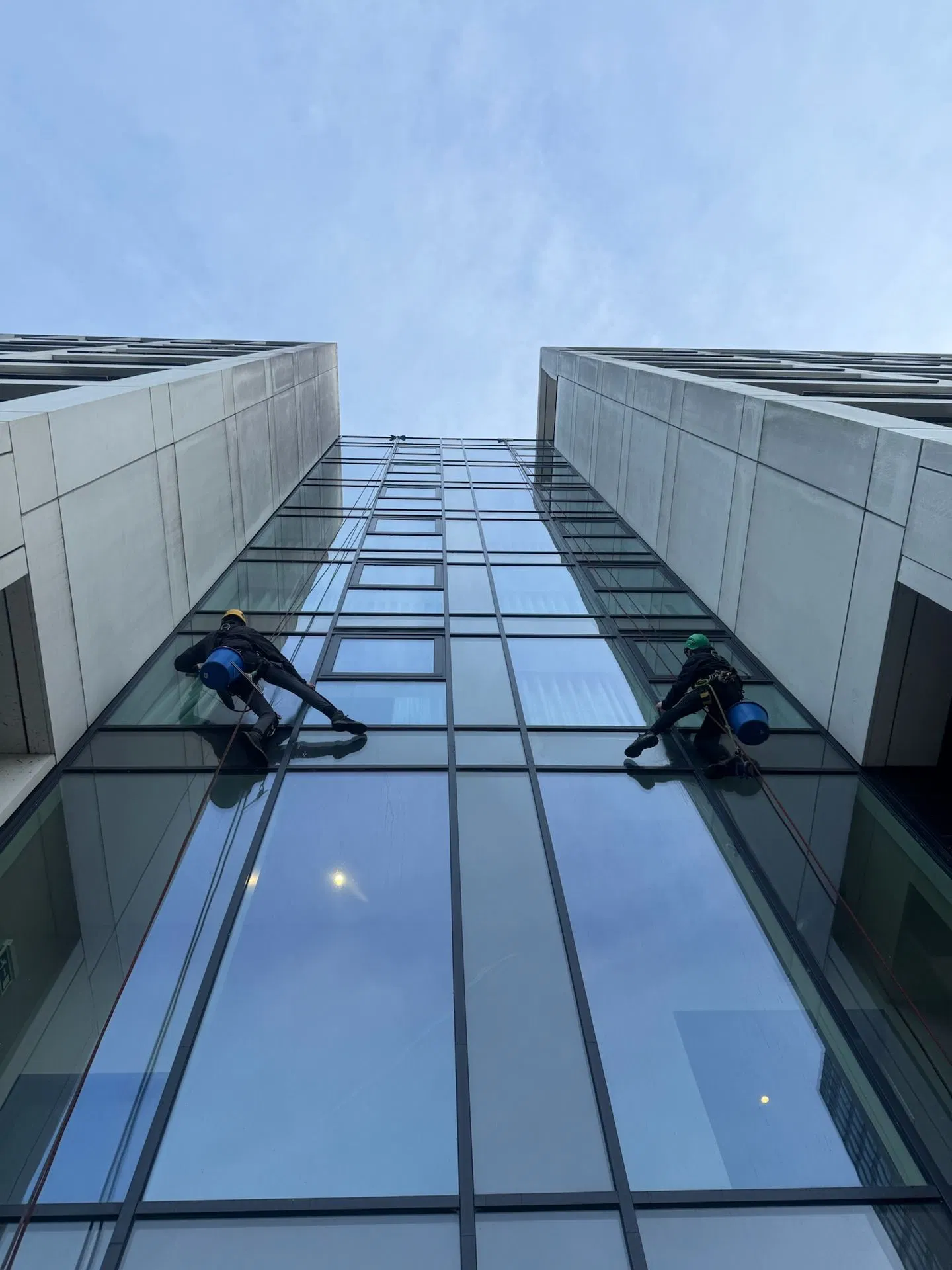
For a building manager, commercial window cleaning involves more than getting the glass clean. The contractor needs to understand the building, choose an appropriate access method, plan around people using the site and make clear what the service includes.
A professional service should begin with a site assessment, not a guess based on the number of windows. Height, façade design, ground conditions and the surrounding area can all affect how work is carried out. Here’s what to expect when arranging commercial window cleaning in Greater Manchester or across the North West.
Start with a site-specific survey
Before quoting, we assess the building and the areas to be cleaned. That includes the height and layout of the façade, the type and condition of the glazing, available roof or ground access, and any nearby entrances, roads or pedestrian routes.
It also helps to establish the exact scope. For example, does the clean include external glass only, or internal windows too? Are frames, sills, doors, canopies or signage included? If the building has sections that need different access methods, those should be identified before the schedule and price are agreed.
You can help us plan by sharing:
- The building address, approximate height and type of property.
- Which elevations or windows need cleaning.
- Known access arrangements, such as a BMU, roof access or restricted ground space.
- Site rules, resident or tenant requirements, and preferred working hours.
- Any particular concerns, such as traffic, deliveries or sensitive areas below the work.
We use this information to assess the job and prepare a suitable access plan and quote.
Expect the access method to suit the building
There is no single method that suits every commercial building. The right choice depends on what needs cleaning and what the site allows.

- Water-fed poles use purified water and are often suitable for low- to mid-level windows that can be reached from the ground. Where appropriate, this can avoid the need to work at height. See our guide to water-fed pole window cleaning.
- MEWPs and cherry pickers provide a raised work platform where the machine can be positioned safely and has suitable reach. Ground conditions, obstacles, space and the need to manage people below all matter.
- Building maintenance units (BMUs) can be used on buildings with suitable installed roof rigs or cradles. The equipment and access arrangements need to be appropriate for the specific work.
- Rope access can be considered for tall or complex façades where other access is impractical. It requires suitable access and anchorage arrangements, competent technicians and a planned rescue procedure.
Some buildings benefit from a combination of methods. For example, water-fed poles may suit lower sections, while a MEWP or rope access is needed for areas that cannot be reached from the ground.
We assess access case by case. Our guide to rope access versus cherry picker cleaning explains some of the practical considerations.
Safety planning should be clear before work starts
The contractor should be able to explain how the work will be managed, who will carry it out and how risks to workers and other people will be controlled. This is particularly important where work takes place above entrances, pavements, parking areas or occupied spaces.
The Health and Safety Executive says work at height should be avoided where reasonably practicable. If it cannot be avoided, the work should be properly planned and carried out by competent people using suitable equipment. Its window-cleaning guidance also highlights the need to consider site conditions, weather, access, people below and emergency arrangements.
Before work begins, ask what arrangements apply to your building. These may include a risk assessment and method statement, barriers or signage, controls for tools and equipment, and a plan for responding to changing weather. For suspended access or other specialist work, emergency and rescue arrangements should be planned in advance.
Building managers also have useful information to share. Tell the contractor about site restrictions, known hazards, opening hours, delivery schedules and any required resident or tenant notices. Coordinating these details helps the team plan the work around the people who use the building.
Check training, equipment and accountability
The team’s competence should match the access method and the work being undertaken. Lion Cleaning Group uses IRATA-trained rope access technicians and IPAF-licensed operators for powered access work. We are accredited by SafeContractor, CHAS and Constructionline.
You should also expect a contractor to explain what equipment will be used and how the site will be managed while cleaning is under way. Ask for relevant insurance information and confirmation that the proposed method, equipment and team are suitable for the job. Accreditations and training are useful checks, but they do not replace a site-specific plan.

Agree the cleaning scope and schedule
Cleaning frequency depends on exposure, building use and the standard you want to maintain. A busy shopfront may need attention weekly or fortnightly, while a commercial office might be scheduled every four to eight weeks. A lower-exposure building may be suitable for a less frequent cycle. Apartment blocks often begin with a six- to twelve-week interval, then adjust based on resident feedback and how quickly the glass becomes dirty.
These are planning guides, not fixed rules. In Manchester and other urban locations, traffic, construction dust and local surroundings can affect how quickly windows need cleaning. Entrance glazing may need more frequent attention than upper floors. A site review can help set a schedule that fits your building rather than applying the same interval everywhere.
Confirm whether the agreement covers one-off work or a regular maintenance programme, which areas are included, and how visits will be recorded. For occupied buildings, agree how and when residents, staff or tenants will be notified. Our guide to apartment block window cleaning in Manchester covers some of these coordination needs.
How commercial window cleaning is priced
There is no reliable single rate for commercial window cleaning. A quote may depend on the size and number of windows, building height, access method, condition of the glass, cleaning frequency and site logistics. MEWP hire, restricted access, traffic arrangements or out-of-hours work can also affect the cost.
When comparing quotes, check that they cover the same areas and level of service. Confirm what is included, how often the work will take place, and whether there are additional charges for access or site arrangements. A survey-based quote should make the proposed scope and method easier to understand.
What happens after the clean?
A clear service should include a way to check that the agreed work has been completed. We finish with a quality inspection and provide a written report. This gives the building manager a record of the visit and a straightforward route for raising any concerns.
Our process has three steps:
- Site survey and access plan: We assess the building, recommend a suitable approach and provide a quote.
- Scheduled clean: We carry out the agreed work, coordinating with you and working around site hours where possible.
- Inspection and report: We check the completed work and provide a written record.
Frequently asked questions
How often should commercial windows be cleaned?
It depends on the building’s exposure, use and appearance requirements. Shopfronts may need weekly or fortnightly cleaning; offices may suit a four- to eight-week cycle; and lower-exposure buildings may need less frequent visits. Review the schedule after a few cleans and adjust it to suit the results.
What does commercial window cleaning cost?
The price depends on the building, the areas included, the access method and how often cleaning is required. High-level work or restricted sites usually need a survey before a meaningful quote can be provided. Ask for a breakdown of scope, access and any additional site costs.
What is the difference between commercial and domestic window cleaning?
Commercial window cleaning is planned around business premises, larger or more complex façades, access equipment and the people using the site. It may involve managing public areas, coordinating with tenants and working at height. The methods and planning depend on the building rather than simply the number of panes.
Can you clean windows outside normal working hours?
We can discuss scheduling around your business or building operations. Suitable times depend on the site, the access method, any noise or safety restrictions and the availability of the team.
Which access method is right for my building?
That depends on the façade, height, available roof and ground access, and the areas to be cleaned. We survey the site and explain the options before recommending an approach.
Arrange a commercial window cleaning survey
Lion Cleaning Group provides commercial window cleaning across Greater Manchester and the North West, with nationwide coverage for larger projects. We work with block managers, facilities teams, property managers and building owners on one-off cleans and scheduled maintenance.
Tell us the building location, approximate height and what needs cleaning. We’ll arrange a site survey and discuss a practical plan. Visit Lion Cleaning Group or contact our team to get started.